Find your forecast
Search a UK city or use location to jump to the nearest forecast page.
All 54 UK locations are listed below.
Live aurora visibility for the UK. Track Kp index, cloud cover, moon phase, and best viewing windows.
Check your local Kp threshold, cloud cover, and darkness window before heading out.
Search a UK city or use location to jump to the nearest forecast page.
All 54 UK locations are listed below.
Season, hours, and sky conditions make the difference.
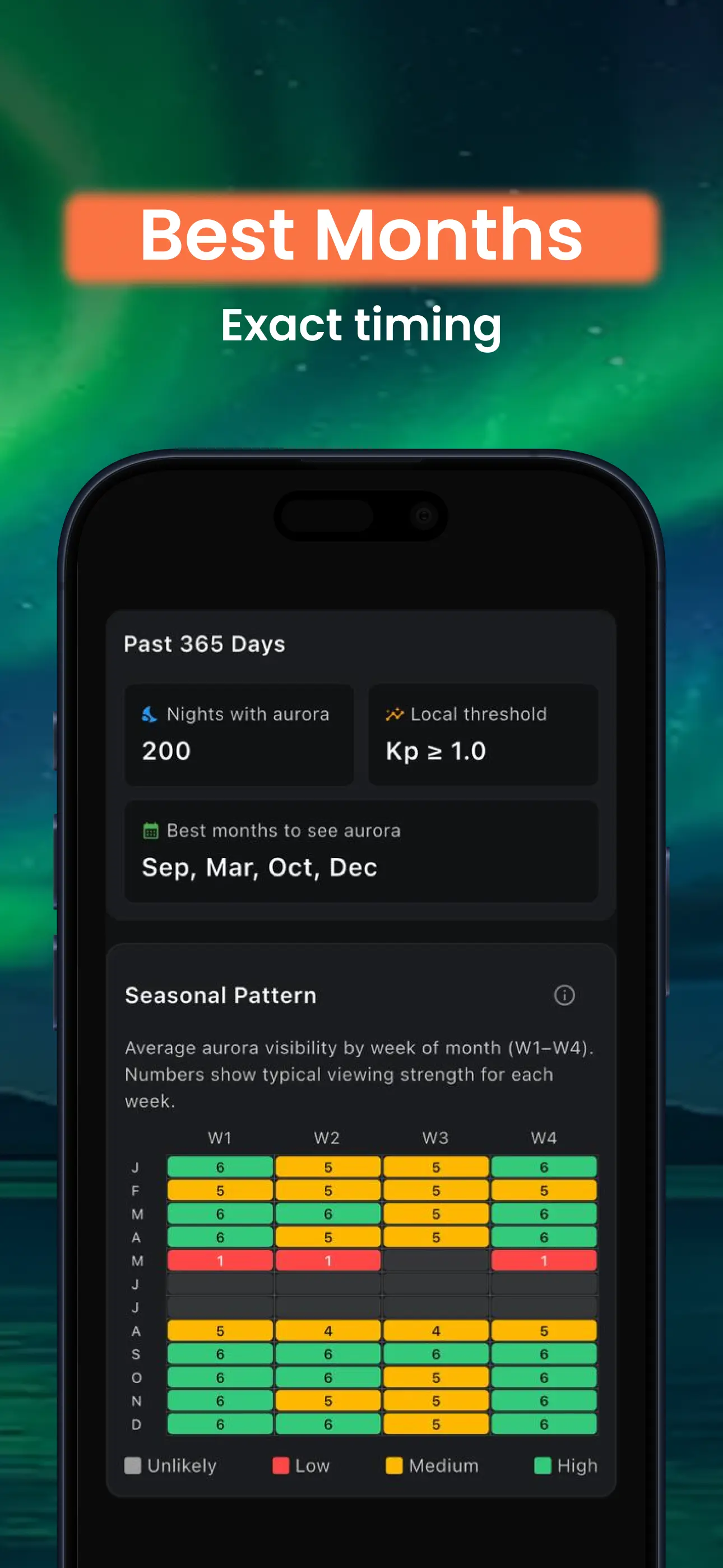
September to March gives the longest dark nights and best odds.
Typical window is 10pm to 2am local time. Use each city page for the best hour tonight.
Low clouds and a dim moon often matter more than a small Kp increase.
Each region shows the typical Kp needed. Tap a city for the local forecast.
Highest UK latitude with dark horizons and frequent activity.
Remote Atlantic skies with very dark horizons.
Open skies and low light pollution on the islands.
Northern mainland coast with clear northern horizons.
Dark glens and coastal viewpoints with strong aurora chances.
Sea horizons and island viewpoints boost visibility.
Mountain skies with darker inland conditions.
Coastal skies improve visibility during active nights.
Works best during stronger activity and clear skies.
Best chances along dark coastlines and rural areas.
Dark skies help when Kp rises above local thresholds.
Moorland escapes improve visibility during storms.
Look north during stronger storms and clear skies.
Requires stronger geomagnetic storms and very dark skies.
Best from the west coast and mountain viewpoints.
Coastal horizons help during strong storms.
Needs the strongest storms and the darkest skies you can reach.
Quick access with local Kp thresholds.
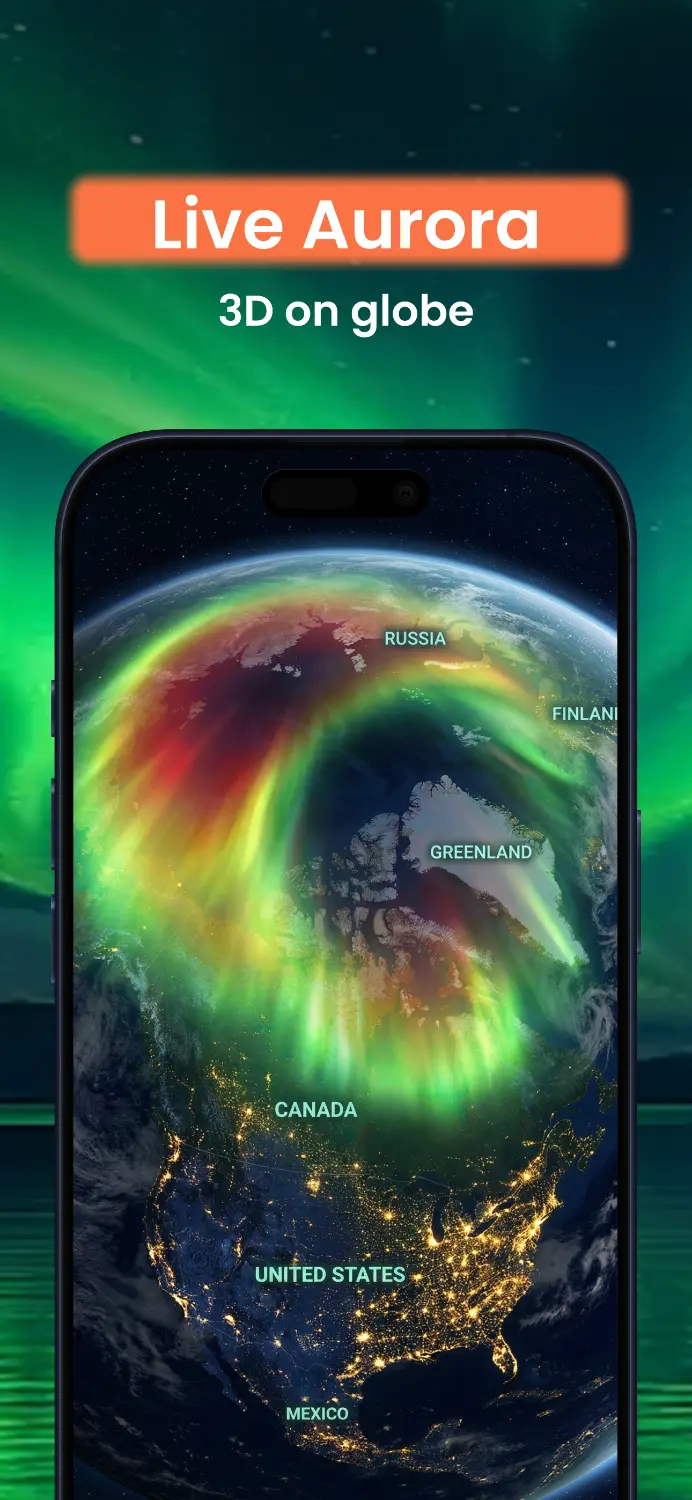
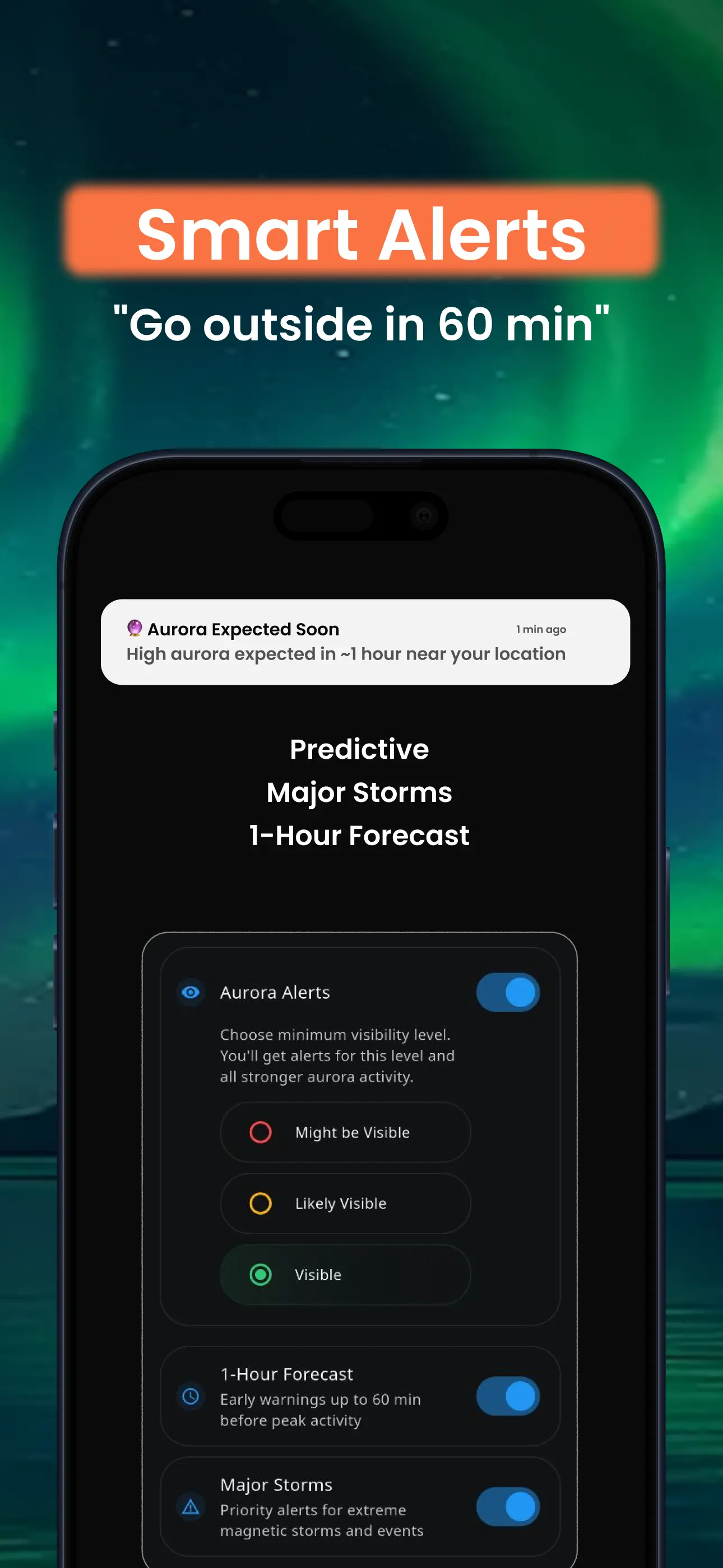
Get instant alerts when aurora appears tonight in the UK. Track Kp index, clouds, and moon phase in real-time. 72-hour forecast shows best viewing times.
Your required KP depends on magnetic latitude. Northern locations need lower KP values. Check your city page for the exact threshold calculated from your MLAT.
Use the "best hour tonight" feature on each city page. It combines KP forecast, cloud cover, and darkness window to find optimal viewing time.
Aurora needs darkness to be visible. Summer's long daylight and bright moonlight significantly reduce aurora visibility, even during strong activity.
AuroraMe combines 4 reality factors: NOAA OVATION space weather, cloud coverage, moon phase, and darkness windows. Location-specific KP thresholds are calibrated from 3+ years of historical data (8,768+ measurements).
Multi-year statistical analysis with best months algorithm, calendar heatmap (12 months × 4 weeks), yesterday's observation windows, and location-calibrated frequency (Lerwick ~50 nights/year vs London ~5 nights/year).
Quiet hours prevent notifications during sleep (default 11 PM - 7 AM, customizable per location). Progressive urgency: strong aurora activity overrides quiet hours. 30-minute cooldown between alerts.